


Not all diseases can be fatal, but some can seriously complicate life.The fungus affects internal organs and skin.Almost all people have opportunistic microorganisms.In some unfavorable circumstances, their number increases, which causes a number of problems.Foot fungus is easily transmitted from person to person, so it is very common.
Fungi are widely distributed in the environment, but damage to human nails and skin only develops under favorable conditions.As we age, the acidic pH of the skin can change to alkaline, which encourages fungal growth.Infection usually occurs through contact;If personal hygiene rules are not followed, the source of infection can be a sick person or common objects.Infection can occur in public places: swimming pools, baths, gyms.And also in everyday life with the widespread use of slippers, socks, manicure accessories, towels and cloths.
Infection routes
The fungus is most often transmitted from a sick person through personal items and shoes.Therefore, in the infection zone there are people who live in the same apartment with him.But in certain cases the disputes do not make themselves felt.Provoking factors are considered:
- increased sweating;
- sores and calluses on the feet;
- tight and uncomfortable shoes.
The ideal environment for mushrooms to grow is warm and humid.

Therefore, tight shoes or boots made of low-quality materials are an excellent breeding ground for infection.Mycosis of the foot occurs due to low immunity.This can happen for various reasons: stress, prolonged illness, and the like.Chronic infections and endocrine system problems affect the human condition.
With prolonged use of antibiotics, internal organs suffer.The microflora changes and this affects the composition of opportunistic microorganisms.Lack of hygiene also affects its growth, since dirt and sweat are a breeding ground.
Children are the most susceptible to the disease.Due to their age, they have delicate skin and weak immunity.For the same reason, older people are susceptible to mycoses.Dangerous public places include:
- swimming pools;
- saunas;
- spa;
- gyms;
- beaches.
Places where you can walk barefoot are potential sources of spread of mycosis.
The humid environment and high temperatures create an ideal environment for spores to multiply.Even regular disinfection of the premises does not help.Also at risk are people who wear closed-toed shoes at work: military personnel, police officers and others.Boots do not allow air to pass through and often damage the legs, opening the way for harmful microorganisms.
Basic shapes
Treatment for foot fungus depends on its form.The most common is interdigital or intertriginous: the injury begins in the area of the thumb and index finger.After which the fungus spreads along the foot.Most often it is transmitted through contact with a sick person or through non-compliance with personal hygiene rules.
In the absence of adequate treatment, the intertriginous form becomes squamous-hyperkeratotic.It manifests itself as deep cracks on the soles of the feet.
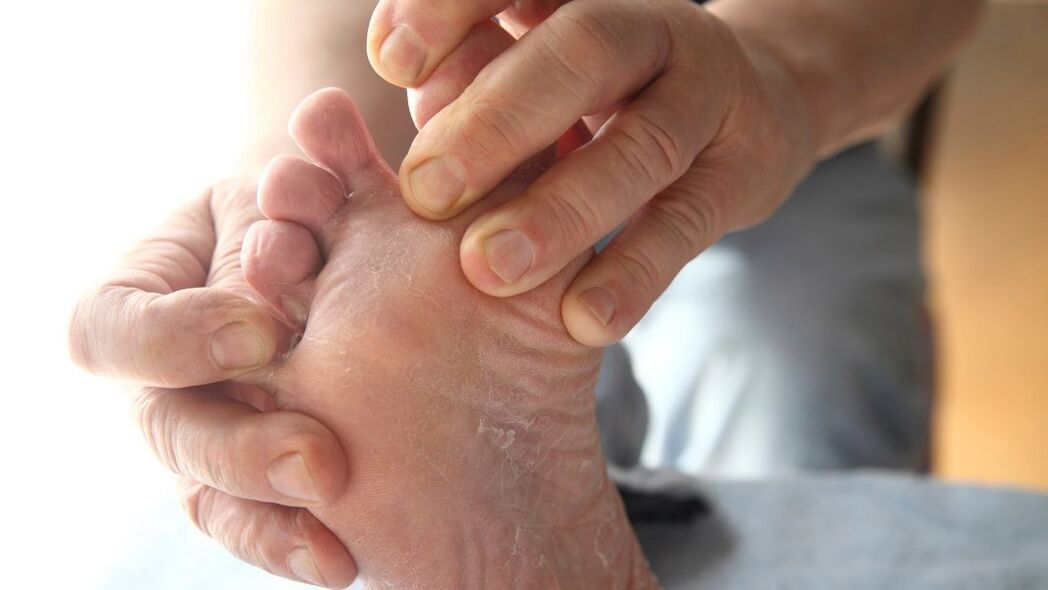
The disease does not produce any symptoms for a long time.At first, shallow grooves appear on the skin that do not cause negative sensations.In severe cases, they move to the lower legs.
The Dyshidrotic form is characterized by the appearance of erosions on the skin: it is a moist and suppurating area.It rarely occurs in the legs;most often it affects the hands.The erased form passes more easily.Signs of foot fungus are mild.There is slight peeling of the skin and itching.The causative agent of the disease is candida.Even without treatment, the condition goes away on its own.
Characteristic symptoms
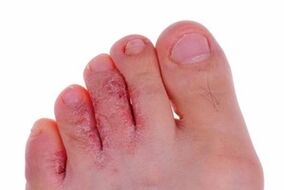
The main manifestations of the fungus are the same for all forms.The first sign of the disease is peeling skin.Microorganisms feed on protein compounds and keratin, thereby destroying the integrity of the integument.
The human body tries to restore the skin and, therefore, enhances its regeneration.This causes itching.Sometimes the surface itches under the influence of Candida.The activity of the fungus alters the functioning of the sebaceous glands and this causes the appearance of an unpleasant odor.Even timely hygiene does not help to get rid of it.In some cases, instead of sweating, intense dryness is observed.
Another symptom of foot fungus is a change in skin color.Yellow or green spots appear.The very surface of the feet becomes thicker and becomes covered with keratinized calluses.Over time it cracks and this can cause some discomfort when walking.
As the disease progresses, blisters with clear fluid appear on the legs.They burst and small oozing sores appear in their place.They provide access to secondary infections.
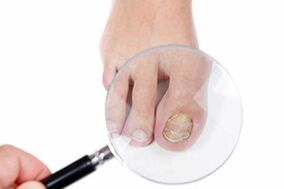
Often the fungus affects not only the feet, but also the nails.The changes start from the free edge.Generally from the thumbs.Yellowing and thickening of the nail plate occurs.It crumbles and reveals pink skin.As the disease progresses, destruction of the nail is observed.
When affected by mold fungi, purulent inflammation of the periungual ridges is observed.The plate itself is painted black or green.
Diagnostic methods
Before choosing how and how to treat fungus on the skin of the legs, it is necessary to confirm the diagnosis.Itching and peeling of the skin do not always appear due to mycosis.A dermatologist deals with this disease.Perform a visual examination of the legs and collect anamnesis.
To accurately determine the pathogen, skin scrapings are made.It is mandatory, otherwise drug therapy will not be effective.Standard microscopic examination can determine the presence of fungi.To do this, the material is stained with special preparations and studied under a microscope.

A more precise study is bacterial culture.The collected samples are placed in a nutrient medium.After a while, fungal colonies begin to grow.They are studied in detail.The disadvantage of this method is the duration.It takes up to four weeks to complete.
PCR analysis allows you to determine the exact pathogen.Requires scraping of the affected area.This is the most accurate and fastest diagnostic method.In some cases, your doctor may recommend donating blood for an enzyme immunoassay.Allows you to determine antibody titers.This information helps find the cause of the disease.
Types of treatment

To cure foot fungus, a comprehensive treatment is required.The standard regimen includes medications for internal and external use.Its goal is to get rid of pathogenic organisms and heal the skin.
Creams and ointments should be applied only to clean surfaces.Apply them in a thin layer before going to bed.Standard treatment lasts four weeks.Any medication must be prescribed by the treating doctor.In severe cases, it is advisable to use glucocorticosteroids.They relieve inflammation and stop the progression of the disease.But they have many side effects and when using them it is necessary to respect the dosage.
For internal use, drugs with fungistatic and fungicidal effects are prescribed.
They suppress the development of pathogenic flora and destroy fungal colonies.
Traditional medicine can mitigate some of the side effects of treatment.Thus, soda baths (1 tablespoon of baking soda per 10 liters of warm water) soften the skin and help eliminate exfoliated areas.A mixture of boiled onions and garlic is used as a compress.They are kneaded until they obtain a paste and applied to the keratinized skin.Put socks on top and leave overnight.In the morning, the feet are easy to clean.